Introduction
Eating is something we do every day. Breakfast, lunch, and dinner are important parts of our daily lives.
However, when life gets busy, we sometimes rely on convenience store meals or instant foods. We may also end up eating at irregular times.
Food is not just something that fills our stomachs. It provides the energy we need to maintain our health and stay active throughout the day.
In this article, we will explore the basics of healthy eating, the characteristics of Japanese, Western, and Chinese cuisine, and practical ways to enjoy delicious meals while saving money.
Table of Contents
- How Food Affects Your Health
- Three Popular Eating Styles in Japan
- How to Maintain a Balanced Diet
- Tips for Saving Money on Food
- Healthy Eating Habits for Busy People
- Conclusion
1. How Food Affects Your Health
Food plays an important role in providing the energy our bodies need.
Carbohydrates provide energy for daily activities, while protein helps build and maintain muscles and other body tissues. Vitamins and minerals also support many important functions in the body.
Eating a variety of foods every day is essential for maintaining good health.
2. Three Popular Eating Styles in Japan
① Japanese Cuisine
Japanese cuisine is a traditional style of cooking in Japan.
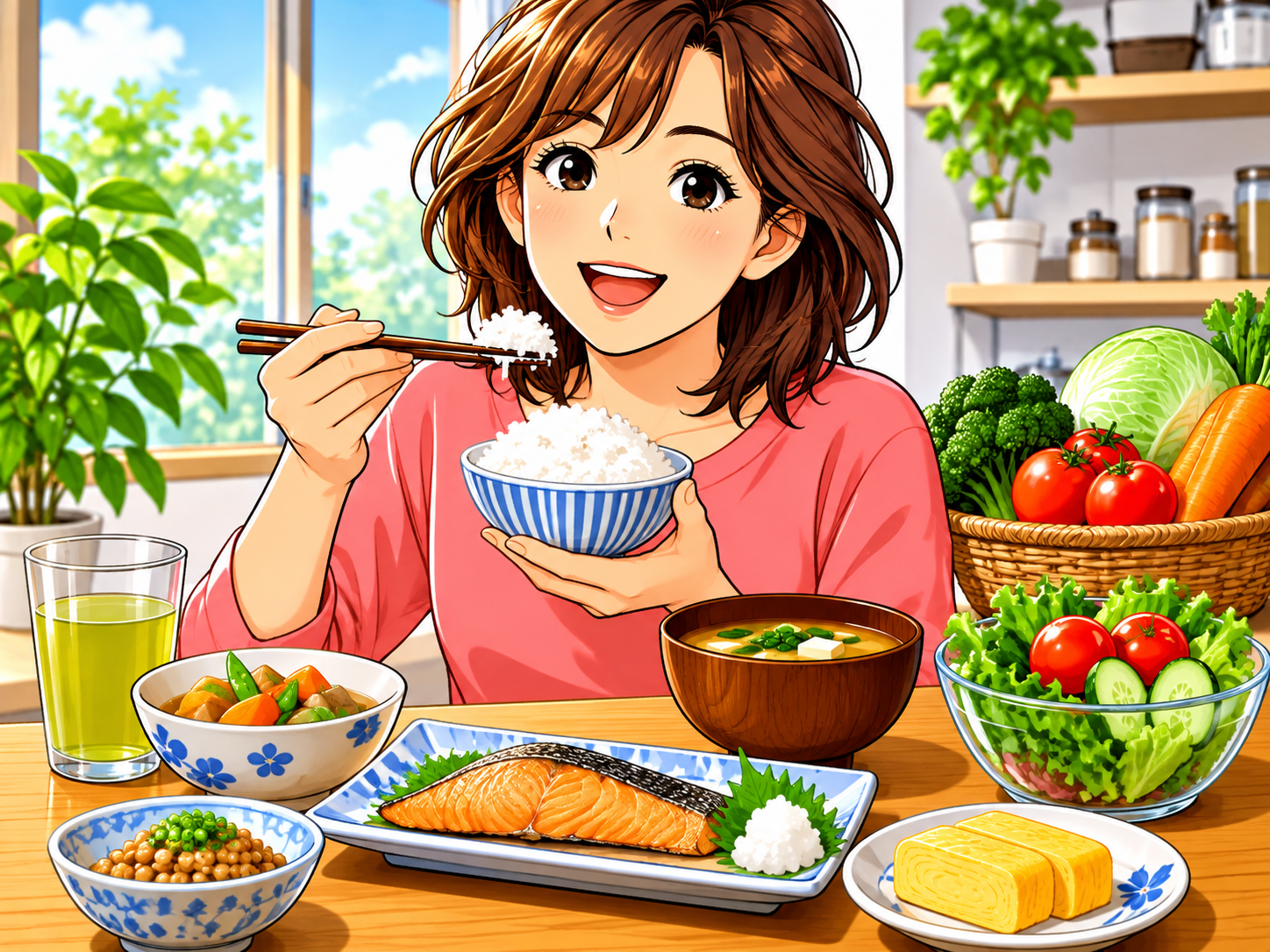
A typical Japanese meal may include steamed rice, miso soup, grilled fish, simmered vegetables, and pickled vegetables.
Japanese meals often include vegetables, fish, and soy-based products, offering a wide variety of ingredients.
These dishes are also easy to prepare at home and are suitable for everyday meals.
② Western Cuisine
Western-style dishes in Japan include hamburg steak, omelets with rice, pasta, gratin, and steak.
Many dishes use meat and dairy products, making them satisfying and filling meals.
Adding a salad or soup can help create a more balanced meal.
③ Chinese Cuisine
Chinese cuisine offers a wide variety of dishes, including stir-fries, simmered dishes, and noodle dishes.
Popular examples include dumplings, fried rice, mapo tofu, and stir-fried vegetables.
One of the advantages of Chinese cooking is that you can combine vegetables, meat, and tofu in many different ways.
However, some dishes contain large amounts of oil or salt, so it is important to pay attention to portion sizes and cooking methods.
3. How to Maintain a Balanced Diet
One simple way to build a healthy meal is to think about three main categories: staple foods, main dishes, and side dishes.
- Staple foods: Rice, bread, and noodles
- Main dishes: Meat, fish, eggs, and soy products
- Side dishes: Vegetables, seaweed, and mushrooms
Combining these food groups makes it easier to get a variety of nutrients.
You can also include fruit and dairy products in moderation.
You do not need to create a perfectly balanced meal every time you eat. Looking at your overall eating habits throughout the day or over several days is also important.
4. Tips for Saving Money on Food
The way you shop can make a big difference when trying to eat healthily while keeping food expenses low.
Affordable ingredients include rice, eggs, tofu, natto, chicken, cabbage, bean sprouts, and seasonal vegetables.
Buying discounted products and choosing seasonal ingredients can help reduce grocery costs.
Preparing several meals at once and dividing them into smaller portions for storage is another useful method.
Even when eating out or buying food at convenience stores, you can improve your meals by adding vegetables or protein-rich foods.
Small changes can make a big difference.
5. Healthy Eating Habits for Busy People
For people with busy jobs, cooking every day can be difficult.
In such situations, it is perfectly fine to choose simple meals that do not require much preparation.
For example, a bowl of rice topped with natto and an egg can make a quick and convenient meal.
Frozen vegetables, canned foods, and ready-made meals can also be useful options.
The most important thing is to find an eating style that fits your lifestyle without spending too much time or money.
6. Conclusion
Daily meals are the foundation of a healthy lifestyle.
Japanese, Western, and Chinese cuisines each have their own unique characteristics and offer many delicious choices.
It is also important to think about nutritional balance while finding ways to save money and reduce cooking time.
You do not need expensive ingredients to enjoy satisfying meals. By combining affordable, everyday foods, you can create a healthy and enjoyable eating routine.
Why not start by making a small improvement to your next meal?



コメント